Young children are naturally curious about the world around them. They love asking questions, exploring new objects, and discovering how things work. Science activities provide an excellent opportunity to turn that curiosity into meaningful learning experiences. The best part is that science for preschoolers does not need expensive equipment or complicated instructions. With a few simple household materials, children can conduct exciting experiments that teach important scientific concepts.
This article focuses on Einfache naturwissenschaftliche Experimente für Kinder im Alter von 3 bis 5 Jahren. These activities are designed specifically for preschool-aged children. They are safe, easy to understand, and fun to perform with adult supervision. Through hands-on learning, children can develop observation skills, problem-solving abilities, creativity, and confidence.
Whether you are a parent, teacher, or caregiver, these ten science experiments will inspire young learners and make science enjoyable from an early age.
Quick Summary Table
| Experiment | Science Concept | Difficulty |
| Rainbow Water | Color Mixing | Easy |
| Floating Egg | Density | Easy |
| Magic Milk | Surface Tension | Easy |
| Baking Soda Volcano | Chemical Reactions | Easy |
| Walking Water | Capillary Action | Easy |
| Balloon Rocket | Air Pressure | Easy |
| Sink or Float | Density and Buoyancy | Easy |
| Growing Crystals | Crystal Formation | Medium |
| Mini Water Cycle | Weather Science | Medium |
| Invisible Ink | Chemical Change | Easy |
Why Science Matters for Preschoolers
Science is more than learning facts. For young children, science is about exploration and discovery. Every experiment encourages children to ask questions and search for answers. This process helps build critical thinking skills that will benefit them throughout life.
Einfache naturwissenschaftliche Experimente für Kinder im Alter von 3 bis 5 Jahren also support early childhood development. Children learn how to observe carefully, compare results, predict outcomes, and communicate their findings. These skills are valuable not only in science but also in language development, mathematics, and social learning.
When children actively participate in experiments, they become engaged learners rather than passive observers. They gain confidence in their ability to investigate and understand the world around them.
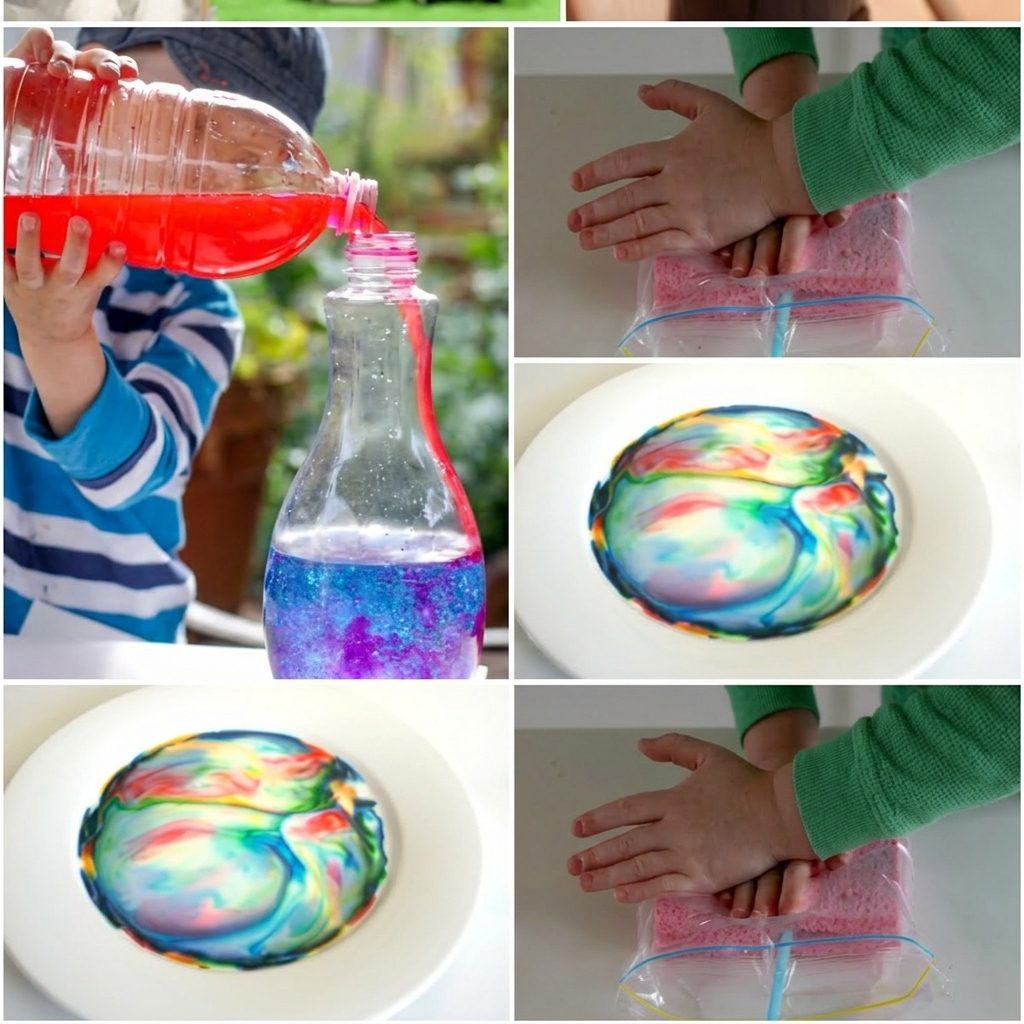
Experiment 1: Rainbow Water
Materials
- Clear cups
- Water
- Food coloring
Instructions
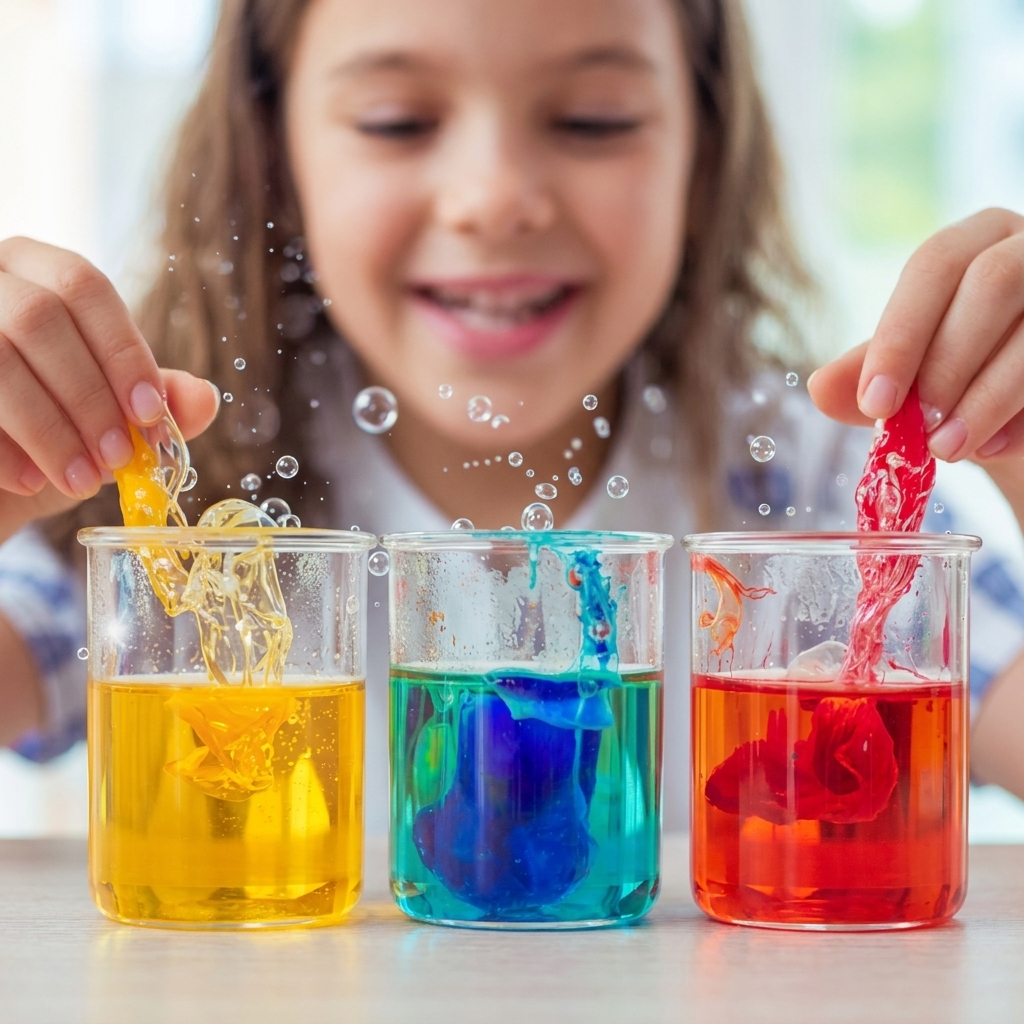
Fill several cups with water and add different food coloring to each cup. Encourage children to mix colors together.
What Children Learn
They discover how primary colors combine to create new colors. Red and yellow make orange, blue and yellow make green, and red and blue make purple.
Scientific Concept
Color mixing introduces children to basic observations and experimentation.
Experiment 2: Floating Egg
Materials
- Egg
- Glass of water
- Salt
Instructions
Place the egg in plain water and observe it sink. Gradually add salt and stir until the egg floats.
What Children Learn
The egg behaves differently depending on the water mixture.
Scientific Concept
Salt increases water density, allowing the egg to float.
Experiment 3: Magic Milk
Materials
- Whole milk
- Food coloring
- Dish soap
- Cotton swab
Instructions
Pour milk into a shallow dish. Add drops of food coloring. Dip a cotton swab into dish soap and touch the milk.
What Children Learn
The colors move and swirl in fascinating patterns.
Scientific Concept
Soap changes the surface tension of the milk, causing movement.
Experiment 4: Baking Soda Volcano
Materials
- Baking soda
- Vinegar
- Dish soap
- Food coloring
Instructions
Place baking soda in a container. Add food coloring and dish soap. Pour in vinegar.
What Children Learn
Children enjoy watching the foamy eruption.
Scientific Concept
A chemical reaction occurs between baking soda and vinegar, producing carbon dioxide gas.
Experiment 5: Walking Water
Materials
- Cups
- Water
- Food coloring
- Paper towels
Instructions
Arrange cups in a row, alternating between empty cups and cups filled with colored water. Connect them using folded paper towels.
What Children Learn
Water appears to travel from one cup to another.
Scientific Concept
Capillary action allows water to move through the paper towel fibers.
Experiment 6: Balloon Rocket
Materials
- Balloon
- Straw
- String
- Tape
Instructions
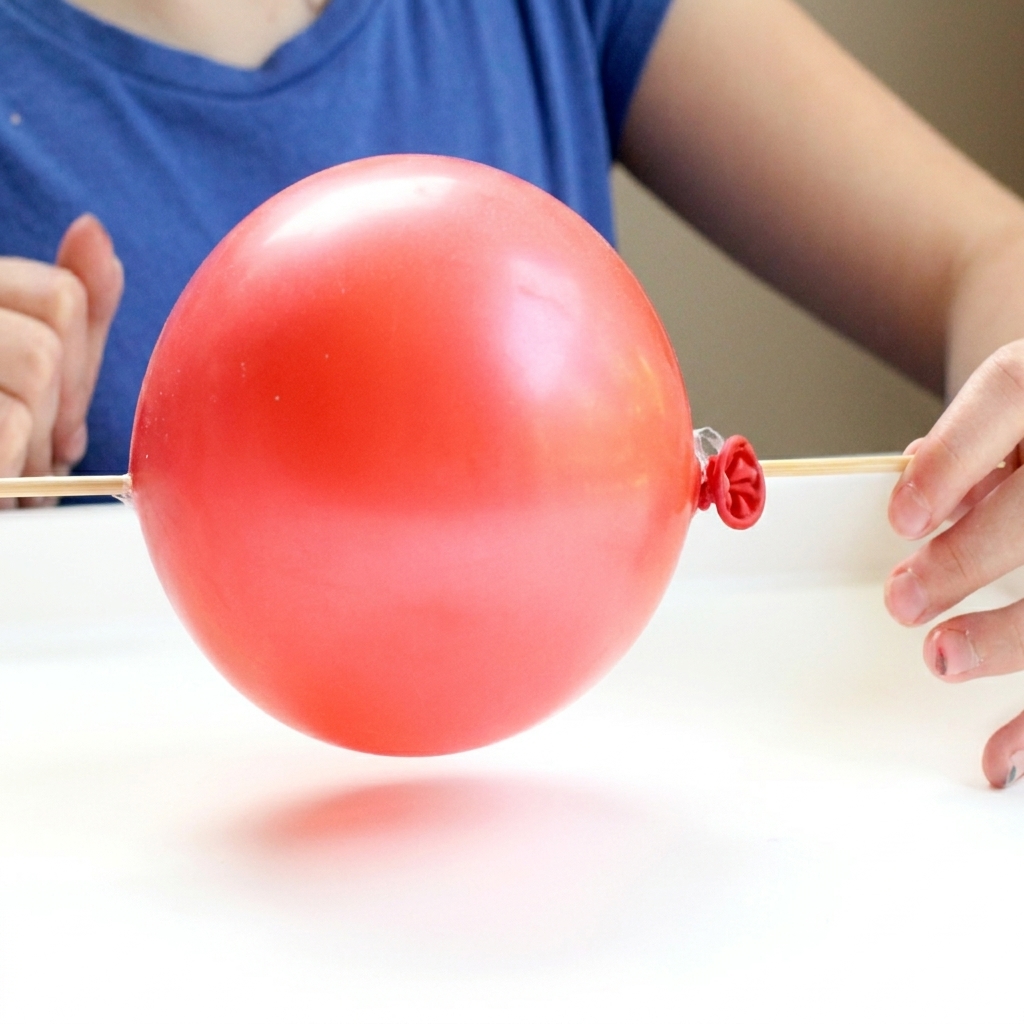
Thread string through a straw and stretch it tightly. Tape an inflated balloon to the straw and release it.
What Children Learn
The balloon zooms along the string.
Scientific Concept
Escaping air creates thrust, demonstrating the basics of motion.
Experiment 7: Sink or Float
Materials
- Basin of water
- Various household objects
Instructions
Ask children to predict whether objects will sink or float before placing them in water.
What Children Learn
Not all heavy objects sink, and not all light objects float.
Scientific Concept
Buoyancy and density determine whether objects sink or float.
Experiment 8: Growing Salt Crystals
Materials
- Salt
- Hot water
- Glass jar
- String
Instructions
Dissolve salt in hot water until no more can dissolve. Place a string in the solution and leave it for several days.
What Children Learn
Beautiful crystals slowly form on the string.
Scientific Concept
As water evaporates, salt particles bond together and form crystals.
Experiment 9: Mini Water Cycle
Materials
- Plastic zip bag
- Water
- Marker
- Tape
Instructions
Draw clouds and a sun on the bag. Add a small amount of water and seal it. Tape it to a sunny window.
What Children Learn
Water changes form and moves within the bag.
Scientific Concept
The experiment demonstrates evaporation and condensation.
Experiment 10: Invisible Ink
Materials
- Lemon juice
- Cotton swab
- Paper
Instructions
Write a message using lemon juice and let it dry. Carefully warm the paper.
What Children Learn
The hidden message appears as if by magic.
Scientific Concept
Heat causes a chemical change that darkens the lemon juice.
Benefits of Science Experiments for Ages 3 to 5
Encourages Curiosity
Preschoolers naturally ask questions. Science experiments provide opportunities to explore those questions through hands-on learning.
Builds Observation Skills
Children learn to notice details, compare results, and describe what they see.
Supports Language Development
Discussing experiments helps children expand their vocabulary and communication skills.
Improves Fine Motor Skills
Pouring, stirring, and measuring help strengthen hand-eye coordination.
Promotes Problem-Solving
Children learn to make predictions and test ideas.
Develops Confidence
Successfully completing experiments helps children feel capable and proud.
Safety Tips for Preschool Science Activities
When conducting Einfache naturwissenschaftliche Experimente für Kinder im Alter von 3 bis 5 Jahren, safety should always come first.
Adult Supervision
An adult should always be present during experiments.
Use Child-Friendly Materials
Choose safe, non-toxic materials whenever possible.
Avoid Small Choking Hazards
Keep small objects away from young children.
Encourage Hand Washing
Children should wash their hands before and after activities.
Create a Safe Workspace
Use a table or protected area that is easy to clean.
How Parents Can Make Science More Fun
Science becomes even more exciting when parents actively participate. Instead of simply giving instructions, encourage children to think like scientists.
Ask questions such as:
- What do you think will happen?
- Why do you think that happened?
- What would happen if we changed something?
- How can we test your idea?
These conversations help children develop scientific thinking and curiosity.
Bringing Science into Everyday Life
Science learning does not need to be limited to planned experiments. Everyday activities provide opportunities for discovery.
In the Kitchen
Mixing ingredients teaches children about changes in materials.
In the Garden
Planting seeds helps children learn about growth and living things.
During Bath Time
Floating toys can demonstrate buoyancy and water movement.
On Nature Walks
Observing insects, leaves, and weather introduces basic biology and environmental science.
These simple experiences reinforce scientific concepts in a natural and enjoyable way.
Why Early Science Education Is Important
Introducing science during the preschool years lays a strong foundation for future learning. Children who engage in scientific exploration develop confidence in asking questions and seeking answers.
Research consistently shows that early exposure to science promotes curiosity, persistence, and problem-solving abilities. These qualities help children succeed in school and beyond.
By offering Einfache naturwissenschaftliche Experimente für Kinder im Alter von 3 bis 5 Jahren, parents and educators can nurture a lifelong love of learning.
Conclusion
Science is one of the most effective ways to inspire young minds. Through hands-on exploration, children gain valuable skills while having fun. The ten activities presented in this guide demonstrate that learning science does not require expensive equipment or advanced knowledge.
From colorful rainbow water and magical milk to exciting volcanoes and balloon rockets, these experiments transform ordinary household materials into memorable learning experiences. They encourage curiosity, observation, creativity, and confidence.
Most importantly, Einfache naturwissenschaftliche Experimente für Kinder im Alter von 3 bis 5 Jahren help children discover that science is everywhere. Every question becomes an opportunity to learn, and every experiment becomes a new adventure. By nurturing curiosity today, we help build the scientists, innovators, and problem-solvers of tomorrow.