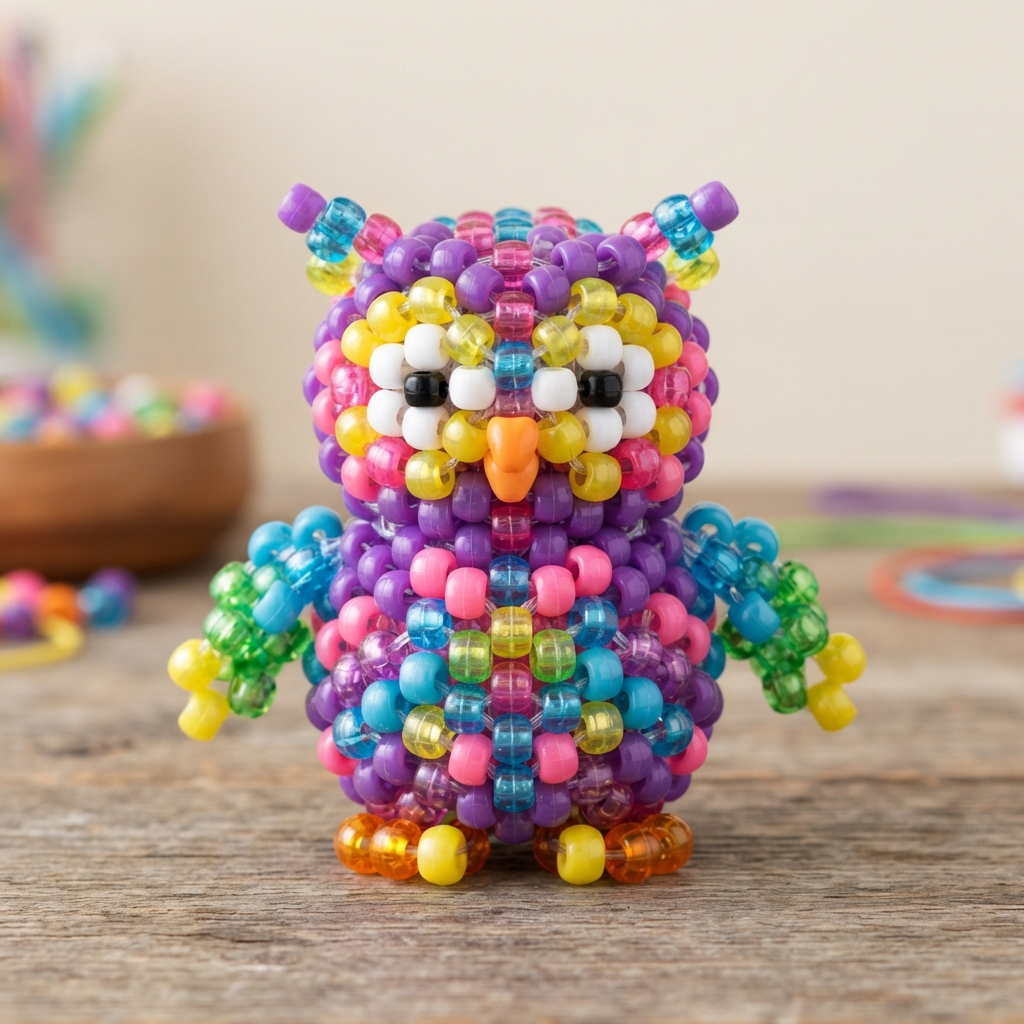
A small owl made from beads is a cute and creative craft project that children can enjoy at home, in school, or during a children’s craft club. With colorful pony beads, strong craft cord, and a simple pattern, kids can create a tiny owl with big eyes, little wings, and a charming shape.
This project is more than just a fun activity. Beadwork can help children develop fine motor skills, hand-eye coordination, concentration, patience, and creativity. Children can also learn about owls and other birds while making their own colorful bead creation.
Whether the finished owl becomes a keychain, backpack decoration, classroom display, or handmade gift, this little project is a wonderful way to combine creativity and learning.
What Is a Small Owl Bead Craft?
A small owl bead craft is a miniature owl created by arranging and threading beads according to a simple pattern. Pony beads are particularly useful for this type of project because they come in many colors and have holes large enough for craft cord.
The owl can be designed with a round body, two large eyes, pointed ear tufts, small wings, and little feet. Children can follow a pattern or invent their own design.
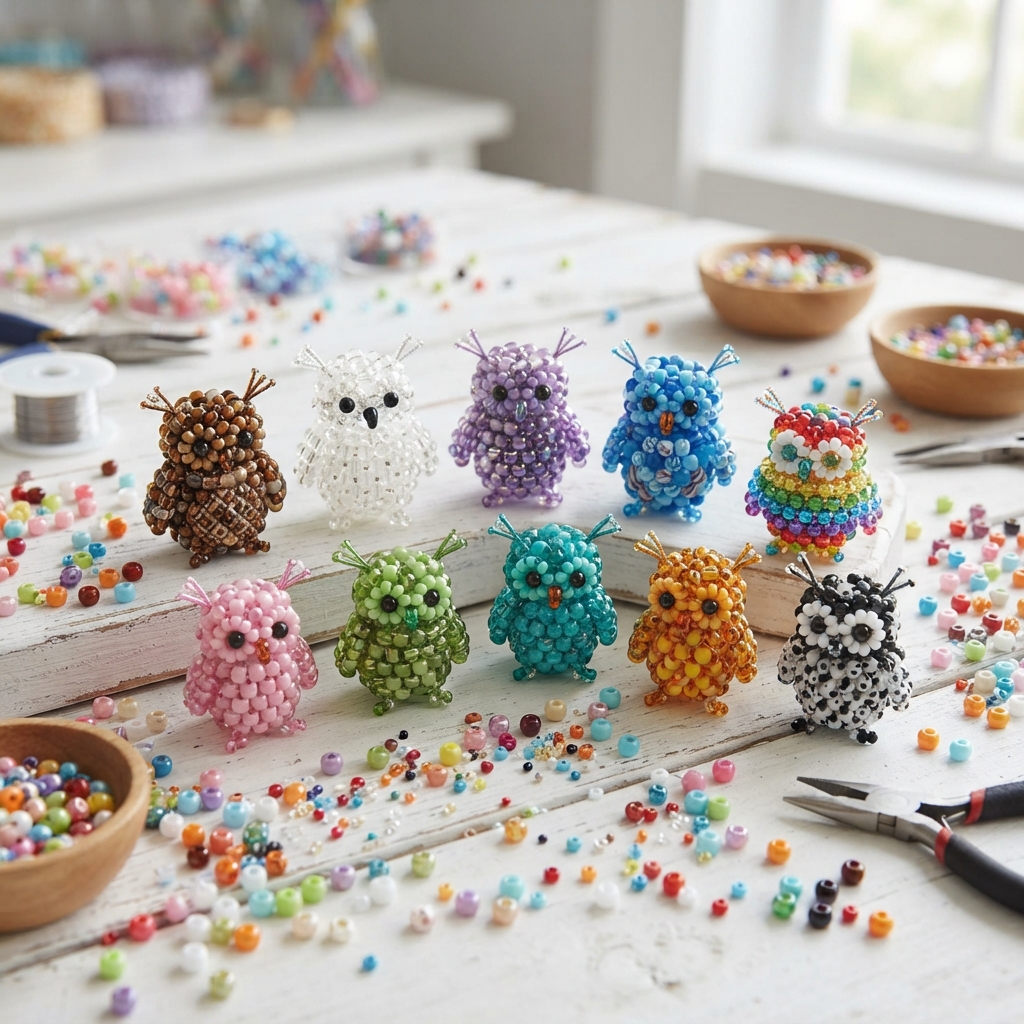
A traditional owl might use brown, gray, black, and white beads, while a children’s craft can be much more colorful. Pink, purple, blue, yellow, and rainbow beads can create a fun fantasy owl.
Materials Needed
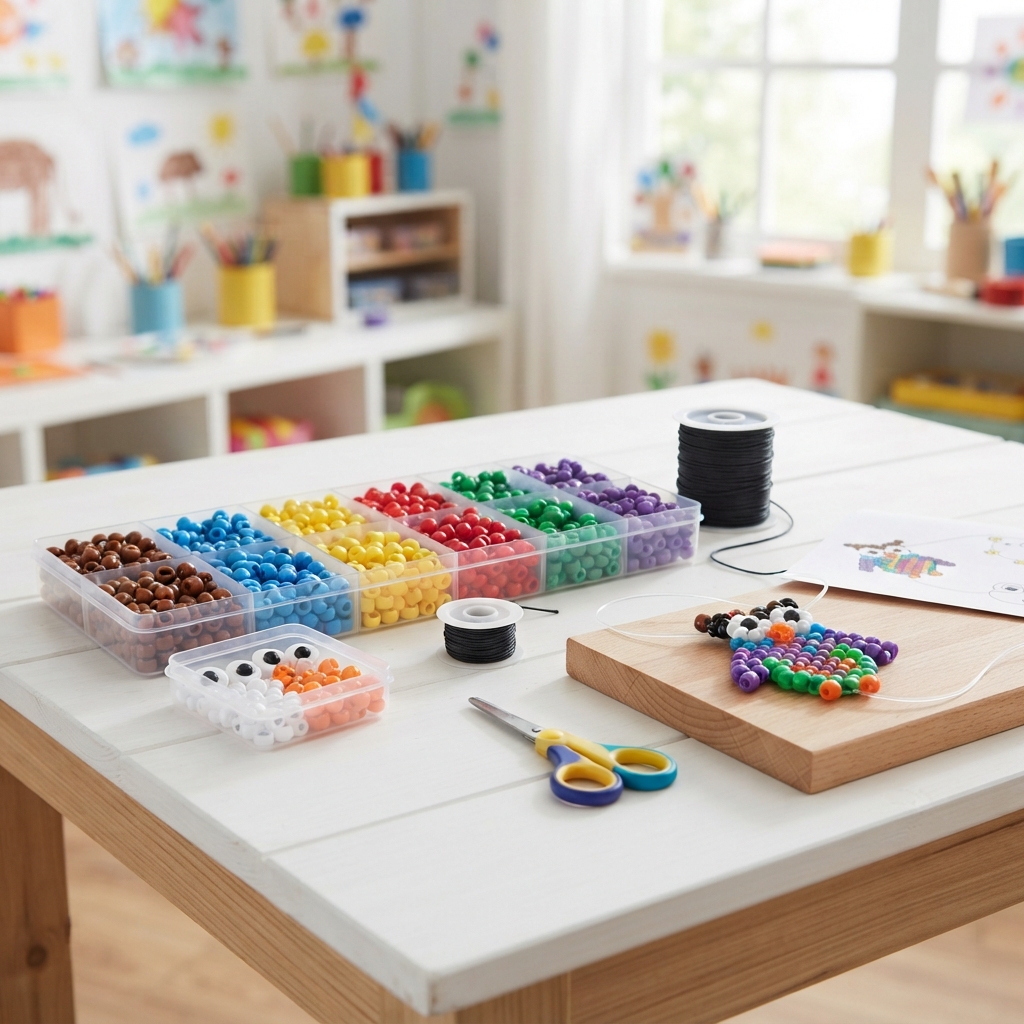
Before starting the project, collect the following materials:
- Brown or gray pony beads
- White beads for the eyes
- Black beads for the pupils
- Yellow or orange beads for the beak
- Strong craft cord or plastic lacing
- Scissors
- A simple owl bead pattern
- A keychain ring, optional
- Small containers for sorting beads
You do not need to use exactly these colors. Children should be encouraged to choose colors they like.
For younger children, larger beads are easier to hold and thread.
Choosing the Owl’s Colors
Color selection is one of the most enjoyable parts of beadwork.
A realistic-looking owl can be made with brown, tan, gray, black, and white beads. A snowy owl design might use mostly white beads with a few black or gray details.
For a more imaginative project, children can create:
- A pink owl
- A purple owl
- A blue owl
- A rainbow owl
- A yellow owl
- A pastel owl
- A black-and-white owl
Letting children choose their own colors makes each finished owl different.
How to Make a Small Owl With Beads

Step 1: Prepare the Materials
Place the beads in small containers according to their colors. This makes it easier to find the correct bead while following the pattern.
If children are using a printed pattern, place it beside the work area.
It can be helpful to draw the owl on paper first. Children can color the drawing and use it as a guide for their bead design.
Step 2: Cut the Cord
Cut a suitable length of strong craft cord.
The cord needs to be long enough for the owl design with some extra length for tying the ends. Do not cut it too short.
Children should have adult assistance when using scissors.
Step 3: Start With the Body
Begin threading the main body beads according to the chosen owl pattern.
Brown or gray beads work well for a traditional owl, but any color combination can be used.
Try to keep the rows organized so the owl maintains its shape.
Step 4: Create the Large Eyes
The eyes are one of the most important parts of an owl design.
Use white beads to create the eye areas and black beads for the pupils. Yellow beads can also be used around the eyes to make them brighter.
Large, round eyes give the small bead owl a cute appearance.
Step 5: Add the Beak
Use one small yellow, orange, or gold bead for the beak.
Place it between the eyes and slightly below them.
This small detail can make the owl instantly recognizable.
Step 6: Make the Ear Tufts
Many owl designs have small pointed sections at the top of the head.
Use a few beads to create two small ear tufts. Brown, gray, black, or contrasting colors can be used.
The ear tufts give the owl a more detailed shape.
Step 7: Add the Wings
Create small wings on both sides of the owl’s body.
You can use the same color as the body or choose a contrasting shade.
For example, a brown owl could have cream-colored wings, while a blue owl could have purple wings.
Step 8: Add the Feet
Small orange or yellow beads can represent the owl’s feet.
They do not need to be large. A few carefully placed beads can create a simple foot shape.
Step 9: Finish the Owl
When the bead pattern is complete, carefully secure the ends of the cord with a strong knot.
Check that the beads are firmly attached.
Trim the extra cord with scissors. An adult can help younger children with this step.
Easy Owl Designs for Beginners
Children who are new to beadwork should start with a simple pattern.
Brown Woodland Owl
Use brown beads for the body, white and black beads for the eyes, and orange for the beak and feet.
Snowy Owl
Use mostly white beads with black details.
Colorful School Owl
Use two or three bright colors that match the child’s favorite school colors.
Rainbow Owl
Use several colors throughout the body to create a cheerful rainbow design.
Night Owl
Use dark blue, black, purple, and silver-colored beads to create an owl inspired by the night sky.
Turn the Small Owl Into a Keychain
One of the best things about a small beaded owl is that it can become a keychain.
After finishing the owl, attach a small keychain ring to the top. Make sure the connection is secure before attaching it to a backpack or pencil case.
Children can make matching owl keychains for themselves and their friends.
A personalized owl can also make a thoughtful handmade birthday or holiday gift.
Make a Beaded Owl Family
Instead of making only one owl, children can create a whole family.
Make:
- A large parent owl
- A second parent owl
- A medium owl
- A tiny baby owl
Use different colors and sizes to make each character unique.
Children can then create names and stories for their owl family. This combines beadwork with creative writing and storytelling.
Create a Woodland Scene
A small owl can become part of a larger classroom craft.
Children can make several beaded animals, including:
- Owls
- Foxes
- Rabbits
- Bears
- Squirrels
- Hedgehogs
- Butterflies
- Birds
Create a large paper forest background and attach or display the finished animals.
The result can become a colorful woodland classroom display.
Learn About Real Owls
The craft can also introduce children to the natural world.
Owls are birds of prey known for their excellent eyesight, strong hearing, and special feathers that help them fly quietly. Different owl species have different colors, sizes, habitats, and behaviors.
While making the bead owl, children can learn about where owls live and what they eat.
They can also discover that not every owl looks the same. Some have large ear tufts, while others have rounded heads.
Beadwork and Fine Motor Skills
Threading beads requires children to use their fingers carefully. They must hold the bead, guide the cord through the hole, and position it correctly.
These movements can help develop fine motor control and hand-eye coordination.
Beadwork can be particularly useful as a hands-on classroom activity because children are learning while creating something they can see and touch.
Bead Patterns and Mathematics
An owl bead craft can also become a simple mathematics activity.
Children can practice counting beads and identifying repeating patterns.
For example:
Brown – White – Brown – White
Or:
Blue – Purple – Yellow – Blue – Purple – Yellow
Ask children to predict which color should come next.
Older children can create more complicated sequences and challenge their classmates to continue them.
Creativity and Personal Expression
There is no single correct way to make a colorful owl.
One child might make a realistic brown owl, while another might create a bright pink and purple owl.
This freedom encourages children to make creative choices and express their personalities through color and design.
Teachers can display all the finished owls together and show how different ideas can create equally beautiful results.
Small Owl Craft for School
A beaded owl can be an excellent classroom project.
Teachers can introduce the craft during an art lesson, animal unit, or nature-themed week.
Students can first learn a few facts about owls. Then they can draw their own owl design on paper before choosing beads.
After completing the beadwork, students can write a short paragraph about their owl.
For example, they might give it a name, describe where it lives, and explain what colors they chose.
This turns one craft into an art, science, and writing activity.
Fun Seasonal Owl Ideas
Owl bead crafts can be adapted for different seasons.
Autumn Owl
Use brown, orange, yellow, and red beads.
Winter Owl
Use white, light blue, and silver-colored beads.
Spring Owl
Try pink, green, yellow, and purple.
Halloween Owl
Use black, orange, purple, and yellow.
Back-to-School Owl
Use bright colors and add letter beads or a small school-themed charm.
Tips for Beginners
Start with a short and simple pattern. A small owl is easier to complete than a large, complicated design.
Sort beads before beginning. This saves time and makes the pattern easier to follow.
Keep the cord organized and avoid pulling it too tightly.
If a child makes a mistake, do not worry. Beadwork is a learning process, and correcting patterns can help children develop patience and problem-solving skills.
Safety Tips
Pony beads are small and can be a choking hazard. Young children should always work under adult supervision, and beads should be kept away from babies and toddlers.
Adults should help children when using scissors and securing knots.
If the owl is being turned into a keychain, make sure all parts are firmly attached before using it.
Conclusion
A small owl made from beads is a charming craft project that combines creativity, learning, and hands-on fun. With colorful pony beads, strong cord, and a simple pattern, children can create an adorable owl with big eyes, a tiny beak, wings, and little feet.
The project can be adapted in countless ways. Children can make realistic woodland owls, snowy owls, rainbow owls, or completely imaginary birds. They can turn their creations into keychains, gifts, classroom decorations, or part of a larger beaded animal collection.
Most importantly, making a small owl bead gives children the chance to practice fine motor skills, concentration, counting, pattern recognition, patience, and creative thinking. With a few beads and plenty of imagination, a simple craft can become a memorable learning experience.