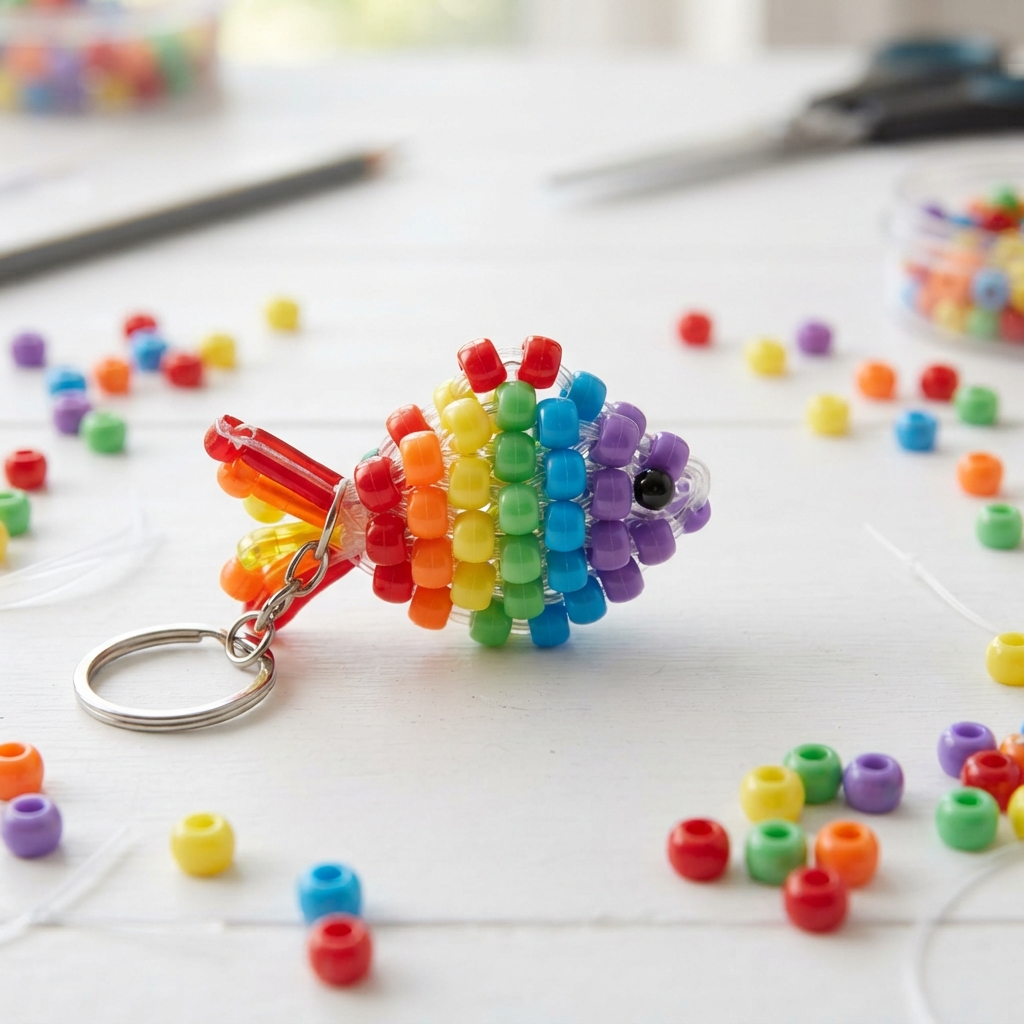
A rainbow fish bead keychain is a cheerful and creative craft project that children can make using colorful pony beads, craft cord, and a simple fish pattern. With bright colors inspired by the rainbow, this little fish can become a fun decoration for a backpack, pencil case, school bag, or keyring.
Beadwork is an enjoyable hands-on activity for children because it combines creativity with simple pattern-making. As children pick up beads and thread them onto cord, they practice concentration, patience, hand-eye coordination, and fine motor skills. They also have the freedom to choose their favorite colors and create a fish that is completely their own.
This project is suitable for school craft lessons, ocean-themed activities, summer projects, birthday parties, or a relaxing afternoon at home.
What Is a Rainbow Fish Bead Keychain?
A rainbow fish bead keychain is a small fish-shaped decoration made by threading colorful beads together in a particular pattern. The fish can contain several rainbow colors, such as red, orange, yellow, green, blue, and purple.
The design can be simple enough for beginners or more detailed for older children who want to experiment with complicated patterns.
Once the fish is finished, a small keychain ring can be attached to the top. This transforms the bead design into a useful accessory that children can carry with them.
Materials Needed
You do not need many materials to make a rainbow fish bead keychain.
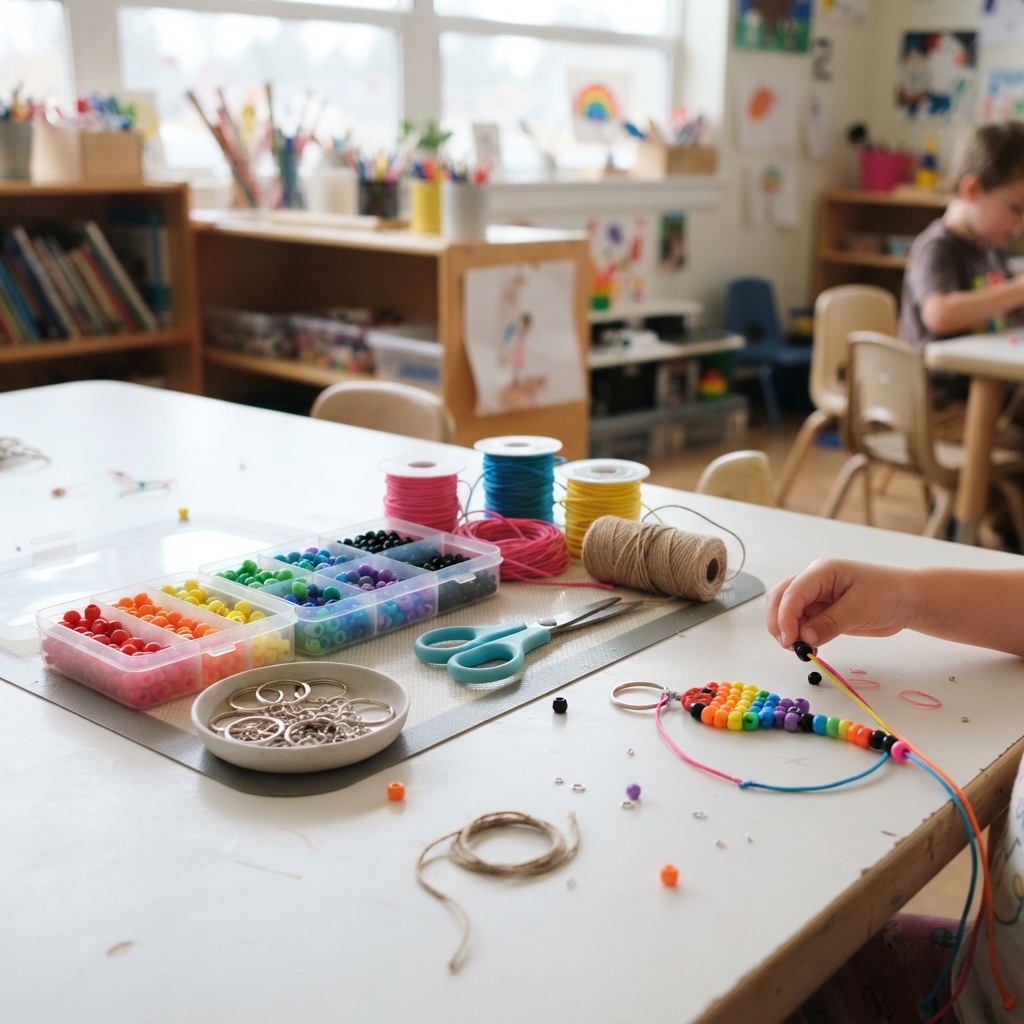
Basic Materials
- Red pony beads
- Orange pony beads
- Yellow pony beads
- Green pony beads
- Blue pony beads
- Purple pony beads
- Black beads for the eyes
- White beads, optional
- Strong craft cord or plastic lacing
- A small keychain ring
- Scissors
- A simple fish bead pattern
Children can also use pink, turquoise, gold, silver, or glow-in-the-dark beads to make their fish more interesting.
For younger children, larger beads are easier to handle.
Choosing the Rainbow Colors
The most exciting part of this project is choosing the colors.
A traditional rainbow sequence is:
Red → Orange → Yellow → Green → Blue → Purple
Children can repeat this sequence throughout the body of the fish.
Another option is to use a different rainbow color for each section. For example, the head can be red, the middle can be orange and yellow, and the tail can transition through green, blue, and purple.
There is no need to follow a strict color order. The goal is to encourage creativity.
How to Make a Rainbow Fish Bead Keychain
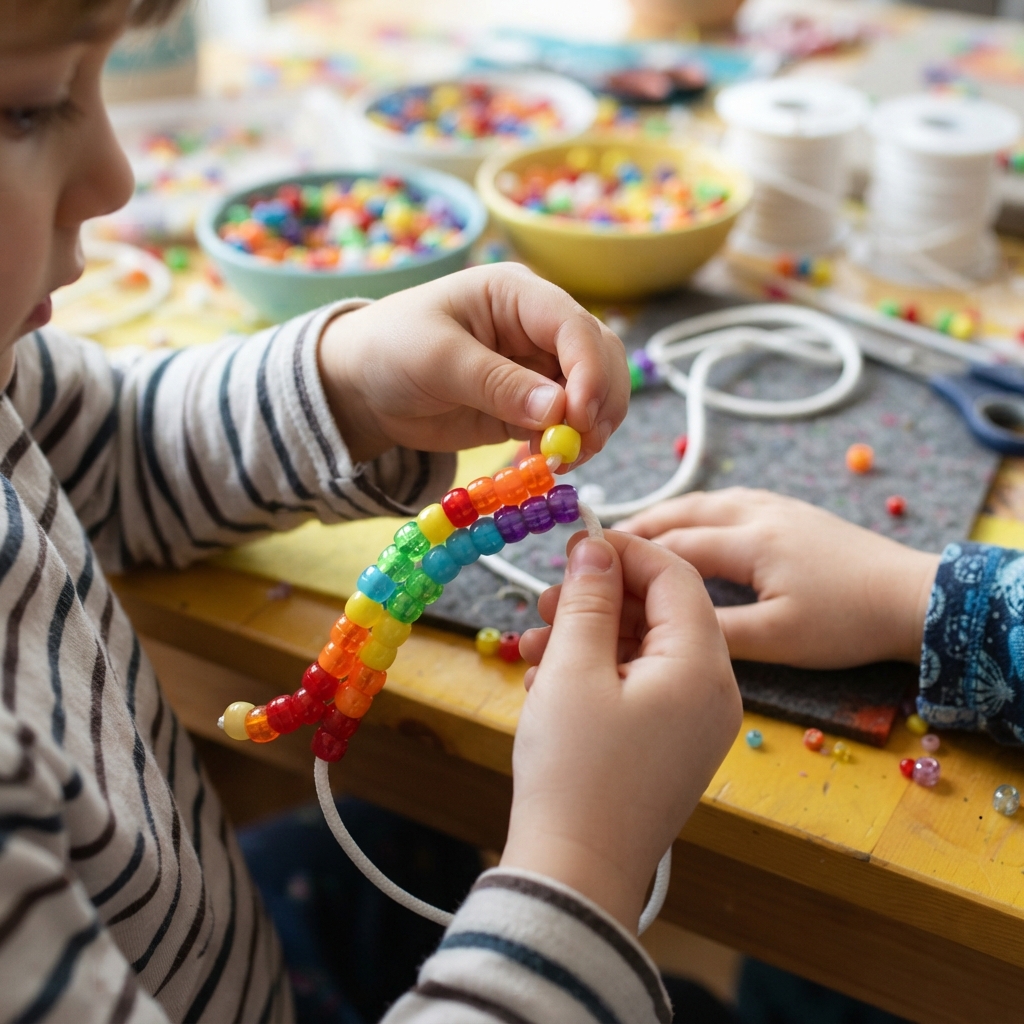
Step 1: Organize the Beads
Before beginning, separate the beads by color.
Place red, orange, yellow, green, blue, and purple beads into small containers.
This makes it much easier to follow a pattern and prevents children from searching through a large pile of beads.
Step 2: Plan the Fish
Draw a simple fish on paper before starting.
Decide where the head, body, fins, and tail will be located.
Children can color the drawing with crayons or colored pencils. This gives them a visual guide for their bead design.
Step 3: Prepare the Cord
Cut a suitable length of strong craft cord.
Make sure there is enough cord for the entire fish plus some extra length for securing the ends.
Children should ask an adult for help when cutting cord.
Step 4: Make the Fish’s Head
Start by creating the head section.
Use one or more bright colors for the face. A few white and black beads can be used to create the eye.
The head can be rounded or slightly wider than the rest of the body.
Step 5: Add the Eye
The eye is an important detail.
Use a small black bead for the eye. You can place a white bead next to it to create a simple contrast.
For a cute cartoon appearance, make the eye slightly larger than the surrounding beads.
Step 6: Create the Rainbow Body
Continue threading colorful beads to create the body.
A simple pattern might be:
Red – Orange – Yellow – Green – Blue – Purple
Repeat the sequence until the body reaches the desired length.
For younger children, a two-color or three-color pattern may be easier.
Step 7: Add the Fins
Use a few beads on each side to create the fish’s fins.
The fins can be the same colors as the body or a contrasting color.
For example, a rainbow fish could have bright yellow fins that stand out against the colorful body.
Step 8: Make the Tail
The tail can be created at the back of the fish using several beads arranged in a V-shaped or triangular design.
Use contrasting colors for the tail or continue the rainbow pattern.
A large colorful tail can make the finished fish look especially playful.
Step 9: Secure the Design
When the fish pattern is complete, carefully secure the cord with a strong knot.
Check that all the beads are held firmly in place.
Trim the extra cord with scissors. Younger children should have adult assistance.
Step 10: Add the Keychain Ring
Attach a small keychain ring to the top of the finished fish.
Make sure the connection is secure before attaching the keychain to a backpack, pencil case, or zipper.
The finished rainbow fish is now ready to use.
Easy Rainbow Fish Patterns for Beginners
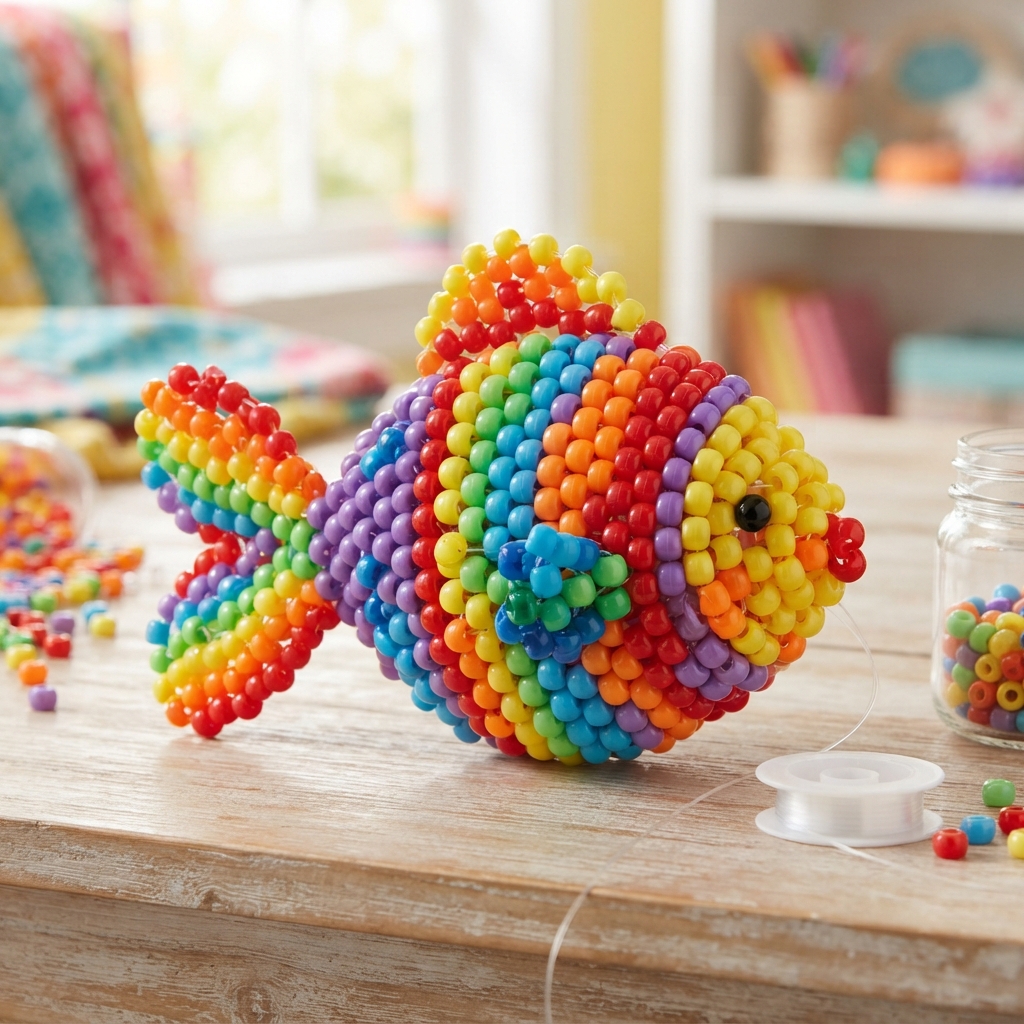
Children who are new to beadwork should begin with a simple design.
Two-Color Fish
Try:
Blue – Yellow – Blue – Yellow
This pattern is easy to remember.
Three-Color Fish
Use:
Pink – Purple – Blue
Repeat the sequence throughout the body.
Classic Rainbow Fish
Use:
Red – Orange – Yellow – Green – Blue – Purple
This creates a bright rainbow effect.
Pastel Rainbow Fish
Use soft shades of:
- Pink
- Peach
- Light yellow
- Mint green
- Baby blue
- Lavender
This creates a softer and more delicate appearance.
Make a Giant Rainbow Fish
Once children understand the basic pattern, they can try making a larger fish.
Use more beads to create a longer body and bigger fins.
A large rainbow fish does not need to become a keychain. It can be displayed as a classroom decoration or hung from a bedroom wall.
Children can even create several large fish and make an underwater scene.
Create an Ocean-Themed Craft
A rainbow fish keychain can be part of a larger ocean project.
Children can make other beaded sea creatures, including:
- Dolphins
- Whales
- Sea turtles
- Octopuses
- Crabs
- Lobsters
- Starfish
- Seahorses
Then create a large paper ocean with blue waves, coral, seaweed, shells, and bubbles.
Place the finished bead animals around the display.
Learn About Fish
The craft can also be connected to a simple science lesson.
Children can learn that fish are aquatic animals that live in water. Different fish species have different shapes, colors, sizes, and habitats.
Talk about tropical fish, freshwater fish, coral reefs, and ocean environments.
Ask children to compare their colorful bead fish with real fish they have seen in books or pictures.
Why Children Enjoy Rainbow Fish Crafts
Rainbow beadwork provides many opportunities for learning.
Fine Motor Skills
Threading beads requires children to make small and controlled finger movements. This helps develop fine motor coordination.
Hand-Eye Coordination
Children need to guide the cord through each bead hole, encouraging coordination between their hands and eyes.
Concentration
Following a color pattern requires careful attention.
Patience
A fish may require many beads, so children learn to work slowly and carefully.
Creativity
Children can choose colors, patterns, shapes, and decorations to create unique fish.
Pattern Recognition
Repeating rainbow sequences provides a fun introduction to patterns and sequencing.
Rainbow Fish as a Friendship Gift
A handmade rainbow fish keychain can make a wonderful gift.
Children can create one for a friend and choose colors that the friend likes.
They can also make two matching fish keychains—one for themselves and one for their best friend.
Adding a small letter bead with the friend’s initial can make the gift even more personal.
School Craft Activity
Teachers can use rainbow fish bead keychains during an ocean-themed classroom unit.
First, students can learn about fish and marine habitats. Then they can draw their own fish design and choose their bead colors.
After completing the project, students can write a short description of their fish.
For example, they might explain where their fish lives, what colors it has, and what they named it.
This combines art, science, writing, and hands-on learning.
Fun Design Ideas
There are many ways to customize a rainbow fish.
Glitter Fish
Use metallic or glitter-style beads for a sparkling effect.
Glow Fish
Use glow-in-the-dark beads for a fun nighttime decoration.
Tropical Fish
Use bright colors inspired by tropical reef fish.
Ocean Blue Fish
Use several shades of blue with white and turquoise.
Rainbow Tail
Make the body one color and use all six rainbow colors for the tail.
Tips for a Successful Project
Sorting the beads before beginning makes the project easier.
Children should also check their pattern regularly to make sure the colors are in the correct order.
If the project is difficult at first, start with fewer colors and a shorter fish.
Use strong cord and secure knots so the finished keychain does not easily fall apart.
Most importantly, allow children to experiment. A slightly different pattern does not mean the project is wrong. It may simply become a new and creative fish design.
Safety Tips
Pony beads are small and can be a choking hazard. Young children should always work under adult supervision, and beads should be kept away from babies and toddlers.
Adults should help children when using scissors, cutting cord, and securing knots.
Before using the finished keychain, check that the beads and keychain ring are securely attached.
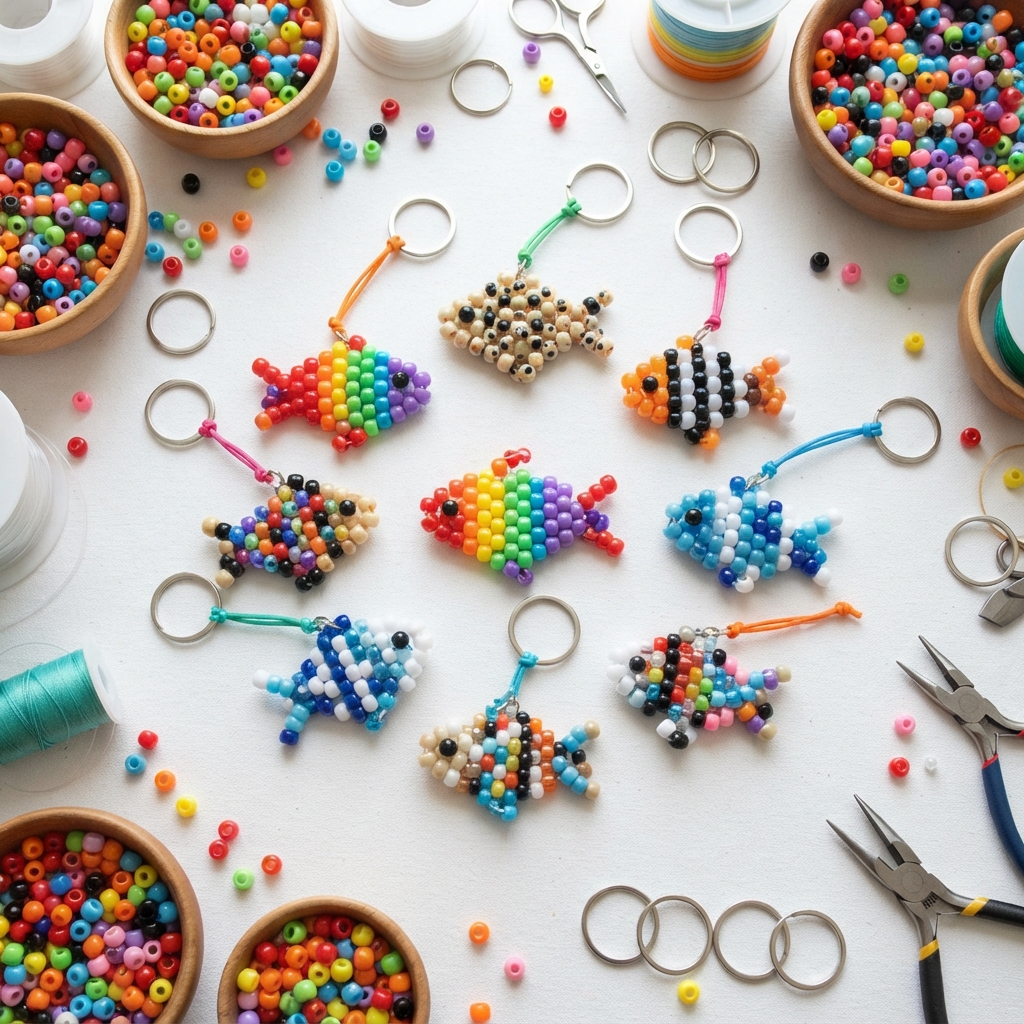
Conclusion
A rainbow fish bead keychain is a colorful, creative, and enjoyable project for children. With pony beads, strong craft cord, and a simple fish pattern, kids can create a bright underwater friend that can be attached to a backpack, pencil case, or school bag.
The project offers much more than a finished decoration. Children can practice fine motor skills, hand-eye coordination, concentration, patience, counting, and pattern recognition while exploring their creativity.
Whether a child creates a classic rainbow fish, a pastel fish, a tropical fish, or a completely imaginary underwater creature, the result is a unique handmade project. With a few colorful beads and plenty of imagination, children can turn a simple craft activity into a fun adventure beneath the sea.