A cartoon word puzzle is a fun and educational craft project that combines colorful cartoon characters with letters, words, and simple learning challenges. It can be made from cardboard, paper, recycled packaging, or craft foam and designed for children of different ages. The puzzle can include cartoon animals, funny characters, school objects, numbers, or imaginary creatures. Each piece can contain a letter, a word, a picture, or a clue that helps children complete the puzzle.
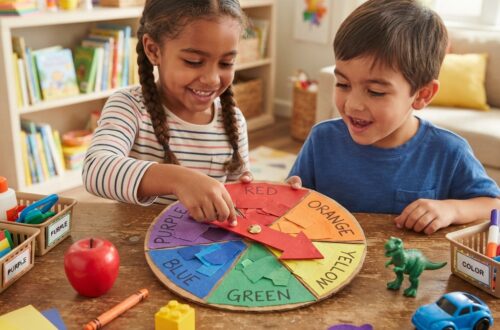
Unlike an ordinary worksheet, a cartoon word puzzle allows children to learn while touching, moving, matching, reading, and thinking. The colorful cartoon theme can make the activity more attractive, especially for young learners who enjoy playful characters. The puzzle can be used at home, in a classroom, at a children’s club, or as part of a school craft exhibition.
What Is a Cartoon Word Puzzle?
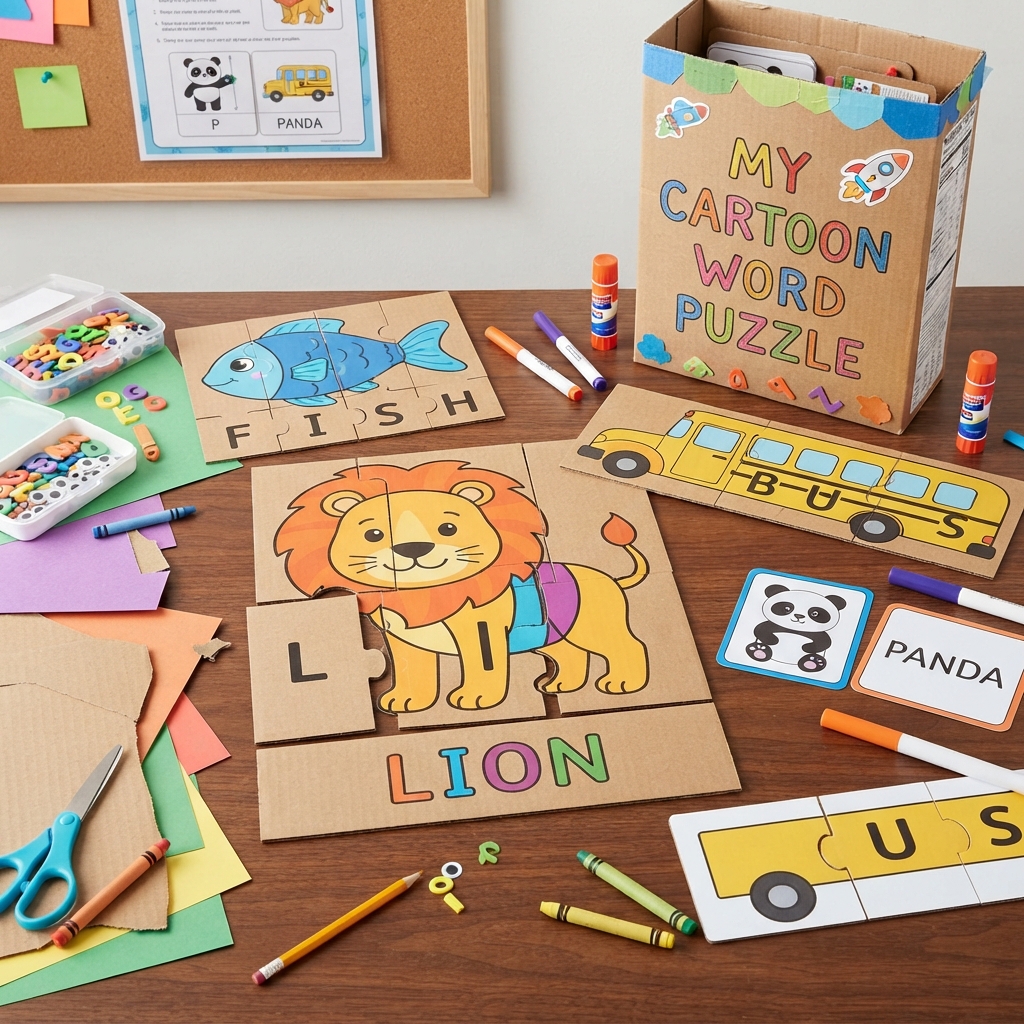
A cartoon word puzzle is a handmade educational puzzle that combines pictures and words. It can take many forms. One simple design is a cartoon character divided into several puzzle pieces. Each piece contains a letter, and children must arrange the pieces to form a word.
Another design can have a cartoon animal on one side and its name divided into separate letters on the other side. Children must match the letters to the correct animal.
For example, a cartoon picture of a CAT can be divided into three pieces labeled C, A, and T. When children put the pieces together correctly, they complete both the picture and the word.
The puzzle can be made more challenging by using longer words or clues.
Why Make a Cartoon Word Puzzle?
There are many reasons to create a cartoon word puzzle. First, it makes language learning more enjoyable. Children often learn better when they are interested and actively involved.
Second, puzzles encourage problem-solving. Children must look carefully at the shapes, pictures, letters, and clues before deciding where each piece belongs.
Third, the activity develops vocabulary and spelling skills. Children repeatedly see and arrange letters while forming words.
The cartoon theme adds another important element: imagination. A colorful character can make the learning activity feel like a game rather than a formal lesson.
Materials Needed
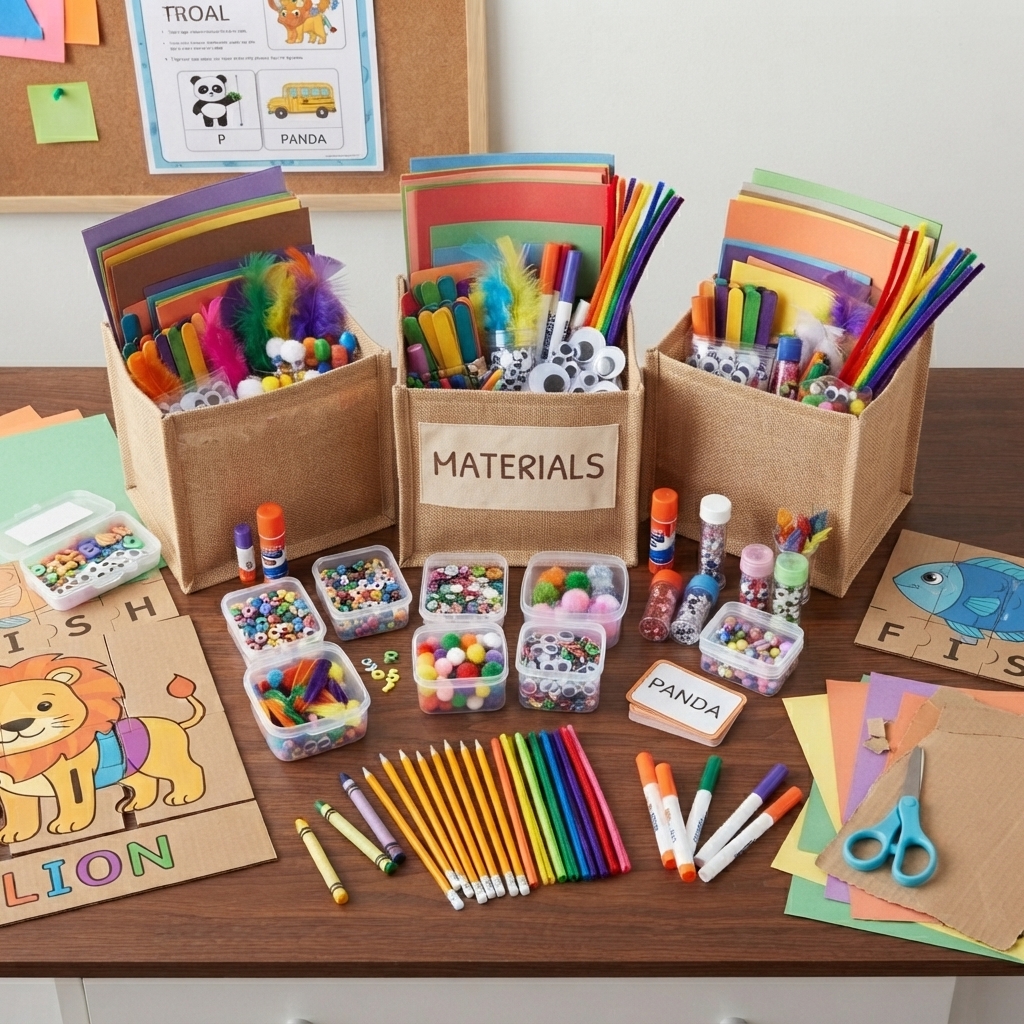
The materials for a cartoon word puzzle are simple and affordable. Thick cardboard is useful because it makes the puzzle pieces stronger and easier to handle.
Colored paper can be used for backgrounds and cartoon characters. White paper can be used for letters and word labels.
Other materials include glue, scissors, a ruler, a pencil, colored markers, crayons, and an eraser.
Optional materials include stickers, craft foam, recycled cereal boxes, colored tape, and laminating sheets.
Reusing cardboard packaging is an excellent way to make the project more environmentally friendly.
Choosing the Cartoon Theme
The first creative decision is choosing the cartoon theme.
Children may enjoy animal characters such as cats, dogs, lions, pandas, rabbits, turtles, or monkeys. They could also create school-themed characters such as cartoon pencils, books, backpacks, rulers, or students.
Fantasy characters can also be used. Dragons, friendly monsters, robots, and imaginary creatures can make the puzzle exciting.
The chosen character should be simple enough to draw and divide into recognizable sections.
Designing the Puzzle
Before cutting anything, children should sketch the complete puzzle.
The cartoon should be large enough for the pieces to be easily handled.
A simple puzzle might contain six to ten pieces. Younger children should use fewer pieces, while older children can work with more complicated designs.
The word should be chosen according to the children’s reading level.
For beginners, short words such as CAT, SUN, DOG, TREE, BOOK, and FISH are suitable.
Older learners can use longer words such as ELEPHANT, BUTTERFLY, SCHOOL, FRIENDSHIP, or ADVENTURE.
Drawing the Cartoon
The cartoon can be drawn on a large sheet of paper or directly onto cardboard.
Children can begin with simple shapes. Circles can form heads and eyes, rectangles can form bodies, and triangles can form ears, noses, or other features.
The character should have bright colors and clear outlines.
For example, a cartoon cat could have a round head, triangular ears, large eyes, whiskers, and a smiling mouth.
The word “CAT” can be placed underneath the character.
Dividing the Picture into Pieces
Once the cartoon is complete, puzzle lines can be drawn across the picture.
The lines can be straight, curved, zigzagged, or shaped like traditional jigsaw puzzle pieces.
For younger children, large and simple pieces are easier to assemble.
Each piece can contain one letter from the target word.
For example, a four-piece cartoon fish might contain F, I, S, and H.
When children assemble the pieces correctly, they see the complete picture and the complete word.
Adding Letters
Letters are an important part of the puzzle.
They should be large enough to read easily.
Children can use uppercase letters for beginners. Older learners may practice lowercase letters or different types of words.
The letters can be written using markers or printed and glued onto the pieces.
Different colors can be used for different categories, such as nouns, verbs, and adjectives.
Matching Pictures and Words
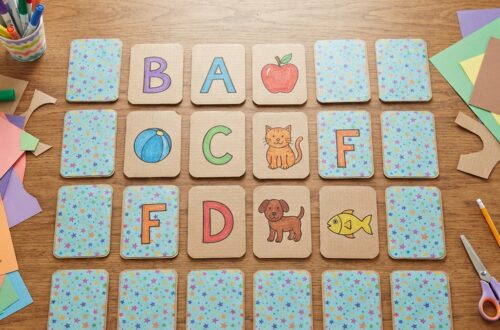
Another version of the cartoon word puzzle uses matching cards.
One set contains cartoon pictures, while another set contains words.
Children must match each cartoon with its correct word.
For example, a picture of a cartoon lion must be matched with the card that says “LION.”
This activity is especially useful for vocabulary development.
It can also be adapted for learning words in another language.
Making a Spelling Puzzle
A cartoon word puzzle can focus specifically on spelling.
A cartoon picture is shown, but the word is divided into individual letter pieces.
The child must arrange the letters correctly.
For example, a cartoon butterfly might be accompanied by the letters B, U, T, T, E, R, F, L, Y.
The child must place the letters in the correct order.
This activity gives children repeated spelling practice without requiring them to copy the word many times.
Adding Clues
Older children can use puzzles with clues.
Instead of showing the word directly, the puzzle provides a short definition.
For example:
I am an animal. I have four legs and I bark.
The answer is “DOG.”
Children then find the correct cartoon and arrange the letters.
Clues make the puzzle more challenging because students must use comprehension and reasoning.
Creating a Sentence Puzzle
The activity can go beyond individual words.
Children can receive cartoon sentence pieces such as:
The / cat / is / sleeping.
Each word can be printed on a separate puzzle piece.
Students must arrange the pieces to create a correct sentence.
Pictures can provide clues about the correct sentence.
This version helps children learn grammar and sentence structure.
Using the Puzzle for Phonics
A cartoon word puzzle is also useful for phonics practice.
The pieces can contain sounds rather than individual letters.
For example, a word such as “SHIP” can be divided into SH, I, and P.
Children learn that two letters can sometimes represent one sound.
Cartoon pictures make these sound patterns easier to remember.
Teachers can create several puzzles focusing on the phonics patterns currently being studied.
Creating a Classroom Set
Instead of making only one puzzle, teachers can create a complete collection.
Each puzzle can feature a different cartoon character and word.
For example, one puzzle might show a cat, another a dog, another a fish, another a tree, and another a book.
Students can work in small groups, with each group receiving a different puzzle.
After completing their puzzles, students can exchange them.
This creates a cooperative learning environment.
Using Recycled Materials
Cardboard packaging is excellent for making puzzle pieces.
Old cereal boxes can be cut into rectangles and covered with colored paper. Shipping boxes can be used for larger puzzles.
Paper scraps can become eyes, mouths, hats, clothing, or other cartoon details.
Using recycled materials makes the project inexpensive and teaches children about creative reuse.
Instead of throwing away cardboard, students can transform it into an educational game.
Making Strong Puzzle Pieces
Puzzle pieces should be strong enough to survive repeated use.
Thin cardboard can be reinforced by attaching two layers together.
The pieces can also be covered with clear adhesive film or laminated if appropriate.
Rounded corners can make pieces easier and safer to handle.
Teachers can store the completed puzzles in envelopes or small boxes to prevent pieces from becoming lost.
Decorating the Puzzle Box
A homemade puzzle can have its own storage box.
A small recycled cardboard box can be decorated with the name of the game and a cartoon character.
The box can say “My Cartoon Word Puzzle.”
A picture of the completed puzzle can be placed on the front.
This helps children know which pieces belong together.
Educational Benefits
Cartoon word puzzles provide many educational benefits.
They help children recognize letters, spell words, develop vocabulary, and understand the connection between pictures and written language.
They also develop fine motor skills because children must pick up, rotate, and place small pieces.
Problem-solving skills are strengthened as children experiment with different combinations.
The activity can also improve concentration because students need to pay attention to shapes, colors, letters, and pictures.
Social and Communication Skills
The puzzle can be used as a group activity.
Children can discuss where different pieces belong and help each other identify letters.
They learn to take turns, listen to ideas, and cooperate.
Teachers can ask students to explain how they solved a puzzle.
For example, a child might say, “I knew this piece belonged here because it has the letter A and matches the cat’s body.”
This encourages communication and reasoning.
Making the Puzzle More Challenging
As children become better at solving the puzzles, the activity can become more difficult.
More pieces can be added. Words can become longer.
Pictures can be made less obvious.
Clues can replace direct word labels.
Students can also be asked to create sentences using the completed word.
For example, after solving the word “BUTTERFLY,” they might write, “The butterfly is sitting on a flower.”
This connects spelling with sentence writing.
Creating a Cartoon Word Puzzle Game
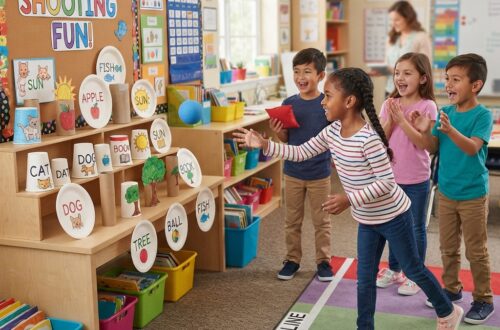
The puzzle can become a friendly classroom competition.
Students can be divided into small teams.
Each team receives a mixed collection of puzzle pieces.
The teacher gives a word or clue.
Teams race to find the correct pieces and assemble the cartoon.
Points can be awarded for correct spelling, complete pictures, and accurate answers.
The focus should remain on learning and teamwork rather than winning.
Safety Considerations
Children should use scissors carefully and according to their age.
Adults should assist with cutting thick cardboard when necessary.
Small pieces should be kept away from very young children because they may present a choking risk.
Glue should be used in a well-ventilated and organized workspace.
All materials should be stored safely after the activity.
Conclusion
A cartoon word puzzle is a creative way to combine art, language learning, and play. By turning words into colorful cartoon characters and puzzle pieces, children can practice spelling, vocabulary, phonics, reading, and sentence construction while enjoying a hands-on activity.
The project is inexpensive and easy to customize. Cardboard, paper, markers, glue, and scissors are enough to create an attractive educational puzzle. Recycled materials can also be used, making the activity environmentally friendly.
The cartoon theme makes the puzzle especially appealing to young learners. Friendly animals, school characters, fantasy creatures, and colorful objects can all become part of the game.
A cartoon word puzzle can be used at home, in the classroom, or during a school exhibition. It can be played individually or with classmates, and its difficulty can be adjusted to suit different ages.
Most importantly, the activity shows that learning words does not have to be boring. Children can touch the pieces, recognize pictures, arrange letters, solve clues, and discover new vocabulary through play. A simple cardboard puzzle can therefore become a powerful learning tool that encourages creativity, concentration, communication, and confidence.
Whether used for a short vocabulary lesson or as a larger classroom project, the cartoon word puzzle offers an enjoyable way to turn language practice into an imaginative adventure.