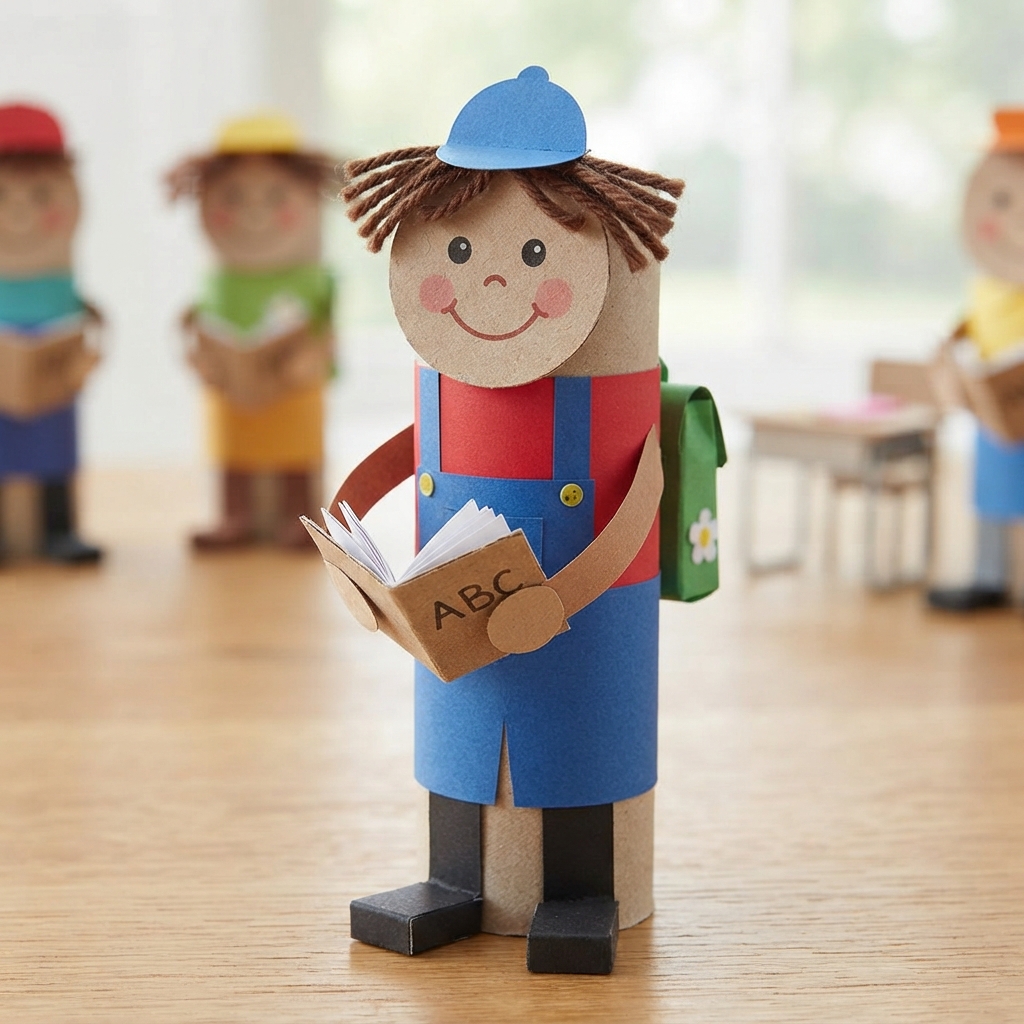
Making a small student from a toilet paper roll is a fun, simple, and creative craft project for children. An empty toilet paper roll may look like an ordinary piece of cardboard, but with a little imagination, it can become a colorful miniature student. The finished character can be used as a classroom decoration, school project, storytelling character, miniature school scene, or educational craft.
This project is also a wonderful example of recycling. Instead of throwing an empty toilet paper roll into the trash, children can reuse it to create something new. With colored paper, cardboard, glue, markers, yarn, and other simple materials, an ordinary cardboard tube can become a student wearing clothes and carrying a tiny backpack.
Creating a paper-roll student encourages children to develop creativity, fine motor skills, planning abilities, and imagination. It also allows them to think about school life and create a miniature character with a unique personality.
Why Make a Student from a Toilet Paper Roll?
Toilet paper rolls are naturally cylindrical, which makes them excellent materials for creating people and characters. Their shape can easily become the body of a miniature student.
The project is inexpensive because the main material is recycled. Families and teachers can collect empty rolls and use them for many different craft projects.
A paper-roll student can also become part of a larger classroom model. Children can make several students, a teacher, desks, chairs, books, school bags, and a blackboard. Together, these pieces can create a miniature classroom.
The activity is therefore more than a simple decoration. It can become a creative way to explore school life.
Materials Needed
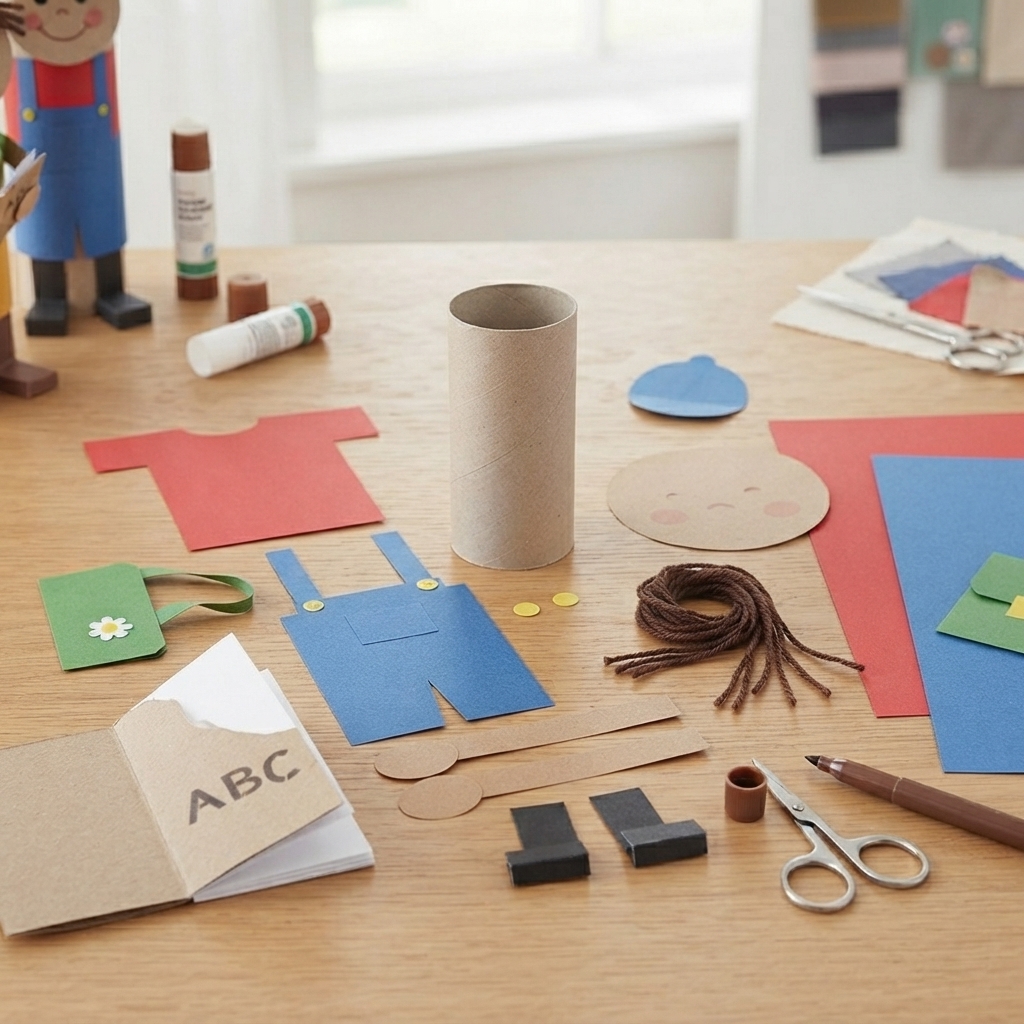
The main material is one clean and dry toilet paper roll. Children should make sure the roll is clean before using it.
Other materials include colored paper, white paper, cardboard, glue, scissors, pencils, colored markers, crayons, and a ruler.
Optional materials include yarn, fabric scraps, buttons, stickers, ribbon, cotton balls, craft sticks, and small pieces of foam.
A recycled cereal box can provide cardboard for the student’s shoes, backpack, books, or other accessories.
Most of these materials can already be found at home or in a classroom craft box.
Planning the Student
Before starting, children can decide what kind of student they want to create.
The character could be a schoolboy or schoolgirl, a young student wearing a uniform, an artist carrying drawing materials, or an imaginary student with colorful clothing.
Children can decide on the student’s hairstyle, clothing colors, shoes, backpack, and facial expression.
Planning these details makes the character more personal.
The student can also have a name. A small paper name tag can be attached to the character later.
Preparing the Toilet Paper Roll
The cardboard roll forms the body of the student. It should be placed upright on the work surface.
If the cardboard has writing or printed patterns, it can be covered with colored paper.
A sheet of colored paper can be measured to fit around the roll. The paper should be slightly shorter than the height of the roll so that the top and bottom remain neat.
Glue can be applied to the paper, which can then be wrapped around the roll.
The paper should be pressed gently until the glue holds.
Creating the Head
The head can be made from a small cardboard circle, a paper ball, or a lightweight foam ball.
One simple method is to cut a circle from cardboard and draw a face on it. The circle can then be attached to the top of the toilet paper roll.
Another option is to make a small paper ball by carefully crumpling paper and covering it with a smooth layer of colored paper.
The head should be proportional to the body.
Drawing the Face
The face is one of the most enjoyable parts of the project.
Children can draw two eyes, a nose, a mouth, eyebrows, and other simple facial features.
The expression can be happy, surprised, curious, or serious.
A smiling student can create a friendly appearance. Children can also give different characters different expressions.
The face does not need to be perfect. Simple drawings are enough to make the character recognizable.
Making the Hair
Hair can be created using colored paper, yarn, or markers.
For paper hair, children can cut strips of black, brown, yellow, orange, or another color and attach them around the top of the head.
Yarn can create a more textured appearance. Short pieces can be glued carefully to the head.
Children can choose different hairstyles. A student could have short hair, long hair, braids, curls, or a simple cap.
This is an excellent opportunity for creative expression.
Creating the Clothes
The body can be decorated with colored paper to represent clothing.
A shirt can be made from one color of paper, while trousers or a skirt can be represented with another.
A school uniform can be created using matching colors. A small paper collar and tie can be added to make the uniform more detailed.
Children can draw buttons, pockets, stripes, or school symbols on the clothing.
If fabric scraps are available, tiny pieces can be used to create a jacket, scarf, or other clothing.
Making the Arms
The arms can be made from narrow strips of paper or cardboard.
Two strips can be cut and attached to the sides of the toilet paper roll.
The arms can be positioned in different ways. One arm can be raised as if the student is answering a question, while the other can hold a book.
Another option is to make both arms point downward.
The position of the arms can help tell a story about what the student is doing.
Creating the Hands
Hands can be represented using small circles or simple paper shapes.
Children do not need to create detailed fingers. Small skin-colored paper shapes are enough.
If the student is holding something, the hands can be placed near the object.
For example, a student holding a book can have both hands positioned near the sides of the book.
Making the Legs
The toilet paper roll already provides a body, but separate legs can be added to make the character more detailed.
Two strips of cardboard can be attached underneath the body.
The legs can be covered with paper to represent trousers, skirts, or other clothing.
The legs should be similar in length so that the student stands properly.
Creating the Shoes
Small pieces of black or colored cardboard can become shoes.
Two small oval or rectangular shapes can be cut and attached to the bottom of the legs.
Children can add shoelaces using thin marker lines or pieces of thread.
Brightly colored shoes can give the character a playful appearance.
Making a Tiny School Backpack
A student often carries a school bag, so adding a miniature backpack can make the character more realistic.
A small rectangle of cardboard can be covered with colored paper and attached to the student’s back.
Two narrow strips of paper can represent the backpack straps.
The backpack can be decorated with stars, hearts, animals, letters, or a small school symbol.
A tiny pocket can also be added to the front.
Creating School Supplies
The student can hold miniature school supplies.
A small book can be made by folding a rectangle of paper. A tiny pencil can be represented by a narrow strip of colored paper.
A ruler can be made from a thin cardboard strip with small lines drawn across it.
A miniature notebook can be created from several tiny pieces of paper glued together.
These accessories make the character look as though they are ready for class.
Making a Book
A book is one of the easiest accessories.
Cut a small rectangle of paper and fold it in half. The front can be decorated with a title or picture.
The student can hold the book against the front of the body.
A science book could have a tiny drawing of a plant or animal on its cover. A mathematics book could contain numbers and shapes.
Adding a Name Tag
A small name tag can make each paper-roll student unique.
A rectangle of white paper can be attached to the shirt. Children can write a name on it using a marker.
If the craft is being made in a classroom, students can make characters representing themselves or imaginary classmates.
Several characters can then be arranged together to create a miniature class.
Creating a Classroom Scene
One of the best ways to use a toilet paper roll student is to create an entire classroom.
A cardboard box can become the classroom. Small wooden sticks can be used to make desks and chairs.
A piece of dark paper can become the blackboard. Tiny paper books can be placed on the desks.
Several toilet paper roll students can sit or stand around the classroom.
A larger character can represent the teacher.
This creates a complete miniature school environment.
Adding a Teacher
A teacher can also be made from a toilet paper roll. The teacher can have different clothing and accessories.
A small paper pointer can be placed in the teacher’s hand. A tiny book or marker can be added as another accessory.
The teacher can stand near the blackboard while the student characters sit at their desks.
This scene can be used for storytelling or classroom presentations.
Creating Different Students
Children can make several students with different personalities.
One student might be holding a book. Another might carry a backpack. A third could hold a pencil or piece of paper.
Different hairstyles, clothes, and facial expressions can make each character unique.
This encourages children to understand that every person can have individual characteristics.
Educational Benefits
Creating a student from a toilet paper roll develops fine motor skills. Children practice cutting, gluing, folding, drawing, and positioning small pieces.
The activity also develops spatial awareness because children must decide where the head, arms, legs, and accessories should be placed.
Problem-solving skills are also important. If the character falls over, children can add a cardboard base. If an accessory is too large, they can redesign it.
The project also encourages storytelling. Once the student character is complete, children can invent a story about their miniature student’s school day.
Learning About Recycling
The project teaches children that recycled materials can become useful craft supplies.
Toilet paper rolls are often thrown away, but they can be transformed into animals, people, buildings, rockets, flowers, and many other objects.
Reusing them helps reduce waste and encourages children to think creatively about materials.
The lesson is simple: before throwing something away, think about whether it can be used for a new project.
Safety Tips
Children should use scissors carefully and according to their age.
Glue should be used in a clean workspace. Younger children may need adult assistance when cutting small pieces or attaching difficult parts.
Small decorations such as beads and buttons should not be given to very young children because they can be choking hazards.
If any sharp tools are needed, an adult should handle them or supervise closely.
Displaying the Finished Student
The finished student can be displayed on a shelf, classroom desk, or cardboard school scene.
Several paper-roll students can be arranged around miniature tables and chairs.
The characters can also be used for storytelling. Children can move them around the classroom scene and create stories about lessons, friendships, school activities, and adventures.
A school exhibition can display many different paper-roll students created by different children.
Conclusion
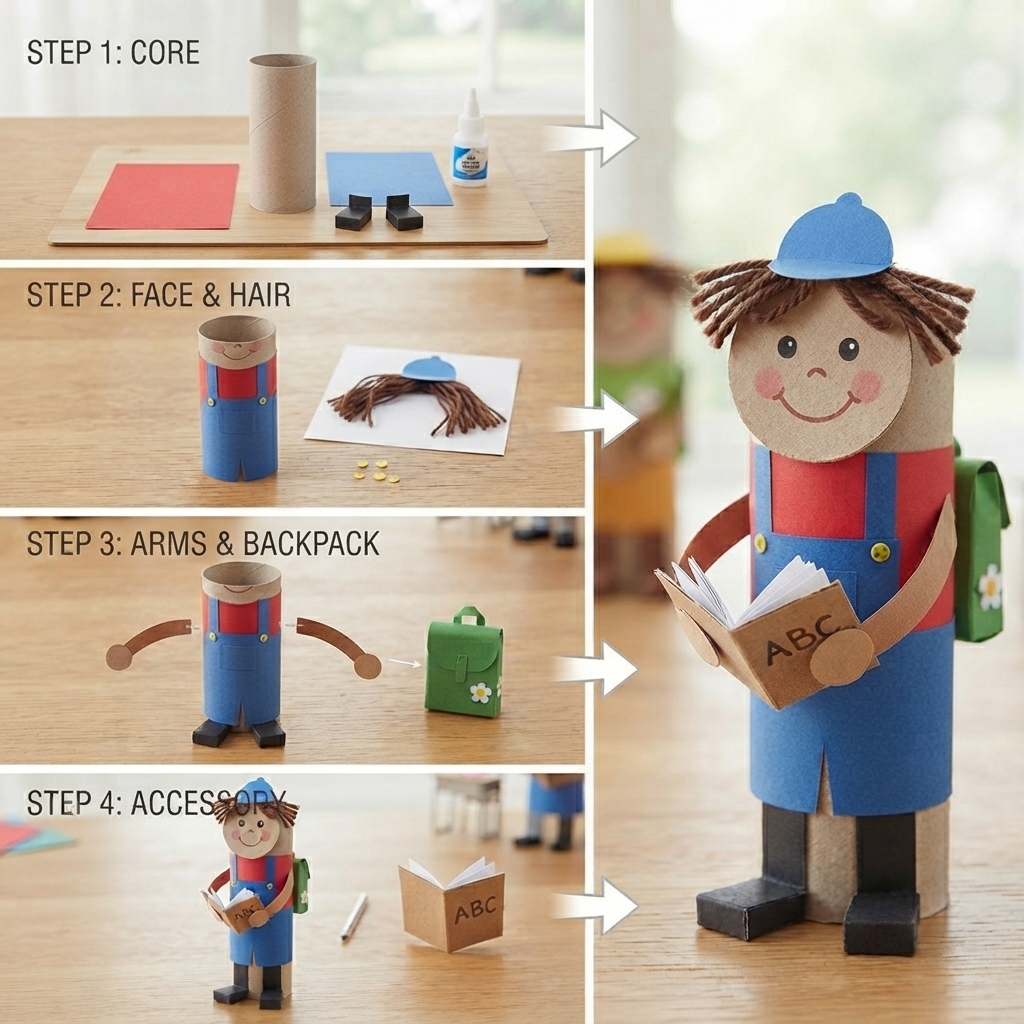
Making a small student from a toilet paper roll is a simple, affordable, and imaginative craft project. An empty cardboard tube can become a colorful student with a face, hair, clothes, arms, legs, shoes, backpack, and school supplies.
The project combines recycling with creativity and learning. Children practice fine motor skills while cutting and gluing, develop problem-solving abilities while constructing the character, and use their imagination when choosing the student’s appearance and personality.
The craft can also become part of a larger miniature school. Children can make desks and chairs from wooden sticks, books from paper, a blackboard from cardboard, and several student characters from toilet paper rolls.
Most importantly, this activity shows children that creative ideas can come from very simple materials. An empty toilet paper roll may seem useless, but with paper, glue, and imagination, it can become a small character with a story of its own.
Whether used as a school assignment, classroom decoration, recycling activity, or fun project at home, a toilet paper roll student is a wonderful way to combine art, education, storytelling, and environmental awareness. The finished character may be small, but the creativity and learning behind it can be very meaningful.